
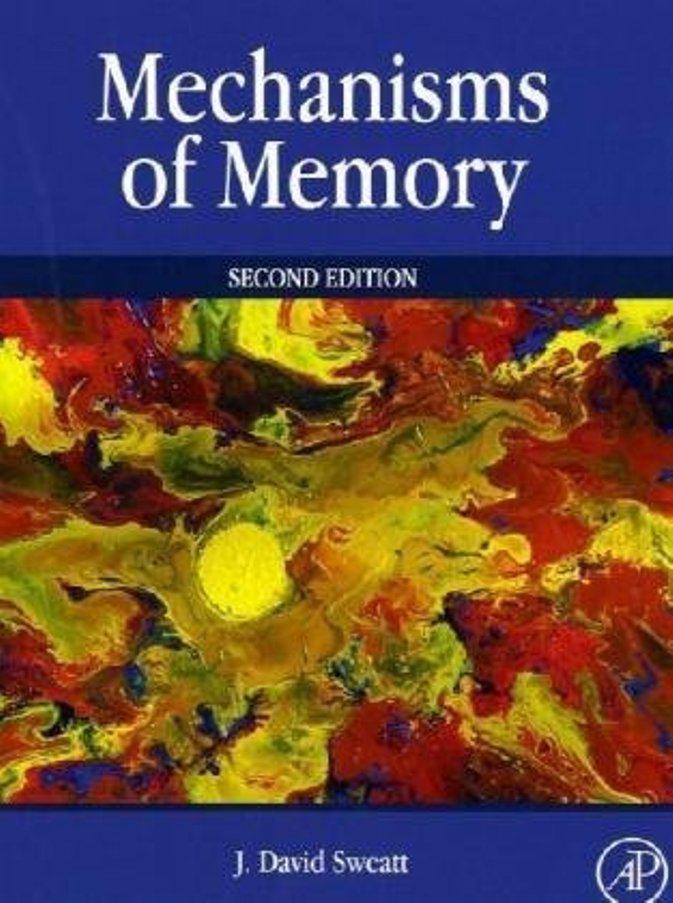
Mechanisms of memory
Sweatt, J. David · London : Academic, 2010
- Publisher
- London : Academic, 2010
- Physical description
- 1 pages
- ISBN
- 0123749514;9780123749512
- Dewey classification
- 621.82
- Language
- English
Summary
Many who work on the cellular and molecular processes of learning and memory are tempted to throw up their hands in frustration and conclude that the problem is insoluble. Human learning and memory is likely the most highly evolved and sophisticated biological process in existence. This book represents the first step at beginning to put together the complex puzzle of the molecular basis of memory. Sweatt creates a framework of thinking about synaptic plasticity and memory at the molecular level
one which recognizes and begins to incorporate this extreme biochemical complexity into our thinking about memory. Now in its second edition this is currently the only book on the market that takes this approach. All chapters are fully revised, and four new chapters have been added. The book is adaptable for courses for senior level undergraduates and, first and second year graduate students. It will be of use to students interested in the medical professions and graduate students interested in translational aspects of basic memory research at a time when translational research is becoming a priority area for research funding agencies in the US and internationally. More than 25% new content, particularly expanding the scope to include new findings in translational research. Unique in its depth of coverage of molecular and cellular mechanisms Extensive cross-referencing to Comprehensive Learning and Memory Discusses clinically relevant memory disorders in the context of modern molecular research and includes numerous practical examples
Digital copy
Catalogue record
| Field | Value |
|---|---|
| 001Control number | 15936 |
| 003Control number identifier | OCoLC |
| 005Date and time of latest transaction | 21 Dec 2010, 13:56 |
| 006Fixed-length data elements – additional material characteristics | m d |
| 007Physical description fixed field | cr cn| |
| 008Fixed-length data elements | 100429s2010 enk o 000 0 eng d |
| 020International Standard Book Number (ISBN) |
|
| 035System control number | (OCoLC)610009102 |
| 040Cataloging source | OPELS eng OPELS |
| 041Language code | eng |
| 050Library of Congress call number | QP406 .S94 2010 |
| 082Dewey Decimal call number | 621.82 Mec-R |
| 100Main entry – personal name | Sweatt, J. David. |
| 245Title statement | Mechanisms of memory [electronic resource] / by J. David Sweatt. |
| 250Edition statement | 2nd ed. |
| 260Publication, distribution, etc. (imprint) | London : Academic, 2010 |
| 300Physical description | 1 online resource. |
| 500General note | Includes index. |
| 505Formatted contents note | 1. Introduction - the basics of psychological learning and memory theory. -- 2. Studies of human learning and memory -- 3. Non-associative learning and memory -- 4. Rodent behavioral learning and memory models -- 5. Associative learning and unlearning -- 6. Hippocampal Function in Cognition -- 7. Long-term Potentiation: A Candidate Cellular Mechanism for Information Storage in the CNS. -- 8. The NMDA Receptor. -- 9. Biochemical mechanisms for information storage at the cellular level. -- 10. Molecular genetic mechanisms for long-term information storage at the cellular level. -- 11. Inherited disorders of human memory - mental retardation syndromes. -- 12. Aging-related memory disorders - Alzheimer's Disease. -- APPENDIX. The Basics of Experimental Design. |
| 520Summary, etc. | Many who work on the cellular and molecular processes of learning and memory are tempted to throw up their hands in frustration and conclude that the problem is insoluble. Human learning and memory is likely the most highly evolved and sophisticated biological process in existence. This book represents the first step at beginning to put together the complex puzzle of the molecular basis of memory. Sweatt creates a framework of thinking about synaptic plasticity and memory at the molecular level; one which recognizes and begins to incorporate this extreme biochemical complexity into our thinking about memory. Now in its second edition this is currently the only book on the market that takes this approach. All chapters are fully revised, and four new chapters have been added. The book is adaptable for courses for senior level undergraduates and, first and second year graduate students. It will be of use to students interested in the medical professions and graduate students interested in translational aspects of basic memory research at a time when translational research is becoming a priority area for research funding agencies in the US and internationally. More than 25% new content, particularly expanding the scope to include new findings in translational research. Unique in its depth of coverage of molecular and cellular mechanisms Extensive cross-referencing to Comprehensive Learning and Memory Discusses clinically relevant memory disorders in the context of modern molecular research and includes numerous practical examples. |
| 533Reproduction note | Electronic reproduction. Amsterdam : Elsevier Science & Technology, 2010. Mode of access: World Wide Web. System requirements: Web browser. Title from title screen (viewed on Apr. 28, 2010). Online version restricted to NUS staff and students only through NUSNET. |
| 650Subject added entry – topical term | Memory--Physiological aspects. |
| 655Index term – genre/form | Electronic books. local. |
| 710Added entry – corporate name | ScienceDirect (Online service) |
| 776Additional physical form entry | Original 9780123749512 0123749514 (OCoLC)435734734. |
| 999Collection | Downloads |
=001 15936=003 OCoLC=005 20101221135658.0=006 m d=007 cr cn|=008 100429s2010 enk o 000 0 eng d=020 ##$a0123749514=020 ##$a9780123749512=035 ##$a(OCoLC)610009102=040 ##$aOPELS $beng $cOPELS=041 0#$aeng=049 ##$aMAIN=050 #4$aQP406 $b.S94 2010=082 ##$a621.82 $bMec-R=100 1#$aSweatt, J. David.=245 10$aMechanisms of memory $h[electronic resource] / $cby J. David Sweatt.=250 ##$a2nd ed.=260 ##$aLondon : $bAcademic, $c2010=300 ##$a1 online resource.=500 ##$aIncludes index.=505 0#$a1. Introduction - the basics of psychological learning and memory theory. -- 2. Studies of human learning and memory -- 3. Non-associative learning and memory -- 4. Rodent behavioral learning and memory models -- 5. Associative learning and unlearning -- 6. Hippocampal Function in Cognition -- 7. Long-term Potentiation: A Candidate Cellular Mechanism for Information Storage in the CNS. -- 8. The NMDA Receptor. -- 9. Biochemical mechanisms for information storage at the cellular level. -- 10. Molecular genetic mechanisms for long-term information storage at the cellular level. -- 11. Inherited disorders of human memory - mental retardation syndromes. -- 12. Aging-related memory disorders - Alzheimer's Disease. -- APPENDIX. The Basics of Experimental Design.=520 ##$aMany who work on the cellular and molecular processes of learning and memory are tempted to throw up their hands in frustration and conclude that the problem is insoluble. Human learning and memory is likely the most highly evolved and sophisticated biological process in existence. This book represents the first step at beginning to put together the complex puzzle of the molecular basis of memory. Sweatt creates a framework of thinking about synaptic plasticity and memory at the molecular level; one which recognizes and begins to incorporate this extreme biochemical complexity into our thinking about memory. Now in its second edition this is currently the only book on the market that takes this approach. All chapters are fully revised, and four new chapters have been added. The book is adaptable for courses for senior level undergraduates and, first and second year graduate students. It will be of use to students interested in the medical professions and graduate students interested in translational aspects of basic memory research at a time when translational research is becoming a priority area for research funding agencies in the US and internationally. More than 25% new content, particularly expanding the scope to include new findings in translational research. Unique in its depth of coverage of molecular and cellular mechanisms Extensive cross-referencing to Comprehensive Learning and Memory Discusses clinically relevant memory disorders in the context of modern molecular research and includes numerous practical examples.=533 ##$aElectronic reproduction. $bAmsterdam : $cElsevier Science & Technology, $d2010. $nMode of access: World Wide Web. $nSystem requirements: Web browser. $nTitle from title screen (viewed on Apr. 28, 2010). $nOnline version restricted to NUS staff and students only through NUSNET.=595 ##$fmc $zmarc.=650 #0$aMemory $xPhysiological aspects.=655 \7$aElectronic books. $2local.=710 2#$aScienceDirect (Online service)=776 1#$cOriginal $z9780123749512 $z0123749514 $w(OCoLC)435734734.=LDR 03756cam a2200409Ia 4500